
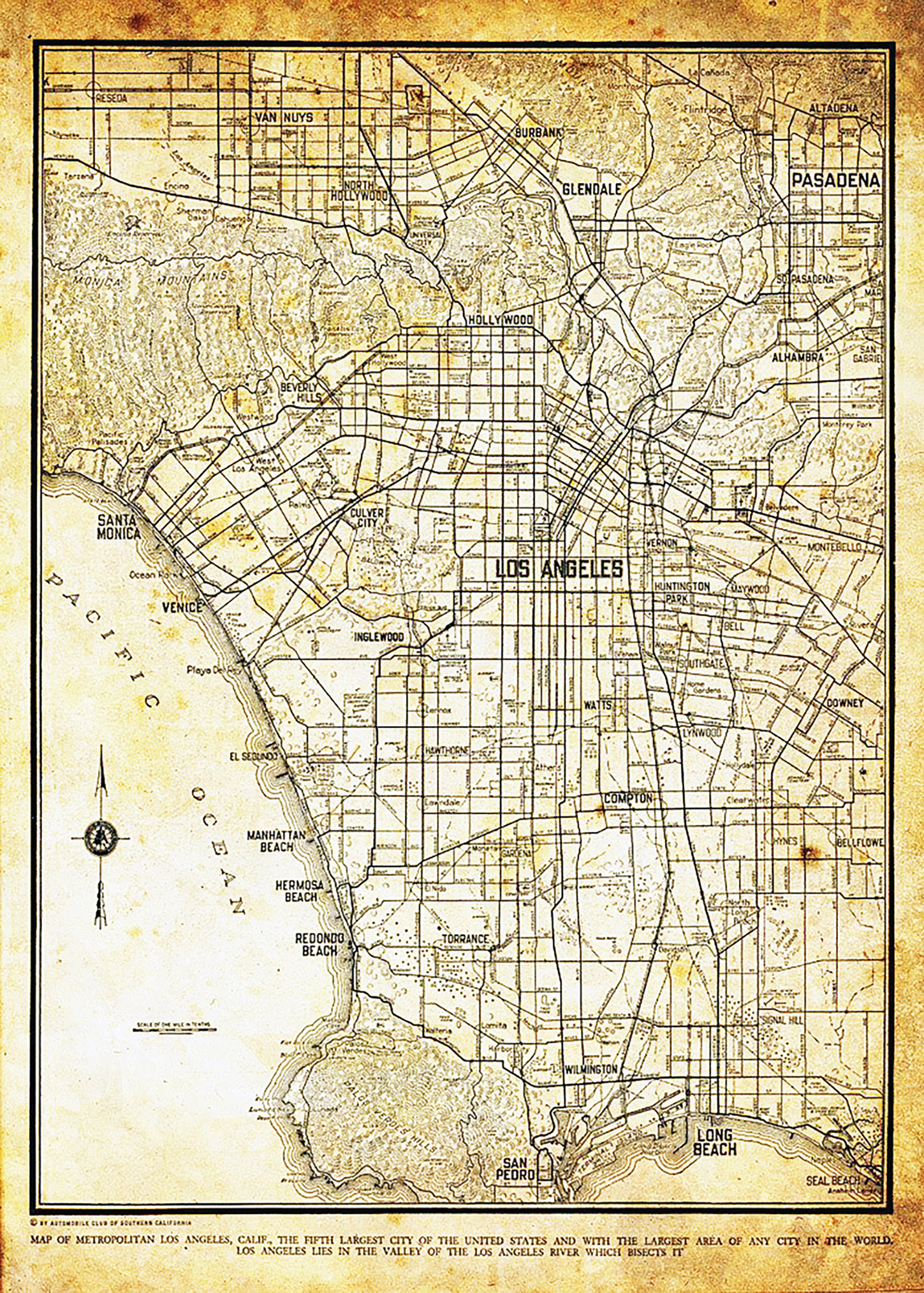
Think Los Angeles has forgotten its Masonic past? Think again. The names of influential California Masons are woven into the city’s grid—honoring the developers, mayors, ranchers, bankers, and visionaries who helped build Southern California.
Abbot Kinney Blvd. (Venice)
Venice’s best-known boulevard honors Abbot Kinney, the tobacco entrepreneur, conservationist, and developer who founded what has been coined “Venice of America” and created its famous canal district. Kinney was a member of Pasadena No. 272 before later affiliating with Santa Monica No. 307.
Banning Blvd. (Carson, Wilmington)
Named for Phineas Banning, the businessman often called the Father of the Port of Los Angeles. Banning helped establish the harbor as Southern California’s commercial gateway and built the region’s first railroad, linking the port to Los Angeles. He was a member of Los Angeles No. 42.
Burbank Blvd. (Burbank, San Fernando Valley)
Both the city and the boulevard commemorate David Burbank, a dentist, rancher, and real estate developer who purchased more than 9,000 acres in the San Fernando Valley and laid the foundation for the city that bears his name. He was a member of Pentalpha No 202.
Burns Ave.(East Hollywood)
Burns Avenue honors James Franklin Burns, whose public career included service as Los Angeles County sheriff, chief of police, superintendent of schools, and city treasurer. Few early Angelenos held as many prominent civic offices. Burns was a member of Los Angeles No. 42.
Carson St.(Carson, Hawaiian Gardens, Lakewood, Long Beach, Torrance)
Named for merchant and rancher George Henry Carson, whose family lent its name to both the city and one of Southern California’s longest east-west thoroughfares. Carson served on the Los Angeles Common Council from 1856 to 1858 and was a member of Los Angeles No. 42.
Culver Blvd. (Culver City)
Harry Culver provided both the city and its principal boulevard with their names. A real estate developer and tireless promoter, Culver transformed a tract of barley and bean fields into one of Southern California’s fastestgrowing communities. He was a member of Culver City No. 467.
De Longpre Ave. (East/West Hollywood, Silver Lake)
This street commemorates French painter Paul de Longpré, whose elaborate Hollywood estate and celebrated flower paintings made him one of Southern California’s best-known artists around the turn of the 20th century. He was a member of Hollywood No. 355.
Downey Ave. (Downey, Lakewood, Paramount)
Named for John Gately Downey, California’s seventh governor, who served from 1860 to 1862, during the opening years of the Civil War. Before entering politics, Downey was a successful pharmacist and businessman. He was a member of Los Angeles No. 42.
Hellman Ave.(Alhambra, Monterey Park, Rosemead)
Named for Isaias W. Hellman, one of the most influential financiers in California history. Hellman founded Farmers and Merchants Bank, helped establish what became the University of Southern California, and played a key role in financing Southern California’s growth. He was a member of Los Angeles No. 42.
Newmark Ave.(Monterey Park, Rosemead)
This avenue honors Harris Newmark, one of 19th-century Los Angeles’s leading merchants and civic leaders. His memoir, Sixty Years in Southern California, 1853–1913, remains one of the indispensable firsthand accounts of early Los Angeles. He was a member of Los Angeles No. 42.
Rowan Ave.(City Terrace, East Los Angeles)
Named for Thomas E. Rowan, who served on the Los Angeles County board of supervisors before become the city’s mayor from 1892 to 1894. He was a member of Los Angeles No. 42.
Santee St. (Downtown)
Today the heart of Los Angeles’ Fashion District, Santee Street—and neighboring Santee Alley— takes its name from Milton K. Santee, a miner, surveyor, real estate developer, and member of the Los Angeles Common Council from 1884 to 1886. He belonged to Pentalpha No. 202.
Silver Lake Blvd. (Atwater Village, Silver Lake)
The neighborhood, reservoir, and boulevard all honor Herman Silver, who served on the Los Angeles City Council in 1896, and later on the city’s Board of Water Commissioners. Silver was a member of West Gate No. 335.
Stearns St. (Long Beach)
Stearns Street commemorates Abel Stearns, one of Mexican California’s most influential merchants and landowners. After being made a Mason in Massachusetts, he arrived in Los Angeles in 1833 and is generally regarded as the first Freemason to settle in the city. He later served as LA’s delegate to the 1849 California Constitutional Convention, as a member of the Common Council, and on the county board of supervisors.
Van Nuys Blvd. (San Fernando Valley)
Named for rancher and businessman Isaac Newton Van Nuys, whose vast landholdings once encompassed much of the San Fernando Valley and helped shape its agricultural and urban development. He was a member of Pentalpha No. 202.
Vignes St. (Downtown)
Running through what was once his vineyard, Vignes Street honors Jean Louis Vignes, widely regarded as the father of California’s commercial wine industry. His El Aliso winery became the state’s largest, and in 1840 he launched California’s commercial wine trade by shipping wine to San Francisco. Vignes was a member of Los Angeles No. 42.
Whitley Ave. (Hollywood)
Named for H. J. Whitley, the developer often called the Father of Hollywood, whose ambitious real estate ventures helped transform a rural community into one of the world’s most recognizable neighborhoods. He was a member of Hollywood No. 355.
Wilson Ave. (Pasadena, San Marino)
Wilson Avenue honors Benjamin “Don Benito” Wilson, mountain man, rancher, winemaker, third mayor of Los Angeles, and founder of Alhambra. Mount Wilson, its observatory—one of the most important astronomical sites in modern history, and numerous other Southern California landmarks also bear his name. Wilson belonged to both Los Angeles No. 42 and Pentalpha No. 202.
Winston St. (Downtown)
Named for Dr. James B. Winston, Los Angeles’ first health officer, who served from 1879 to 1883. He also served on the Los Angeles Common Council and the county board of supervisors. Winston was a member of Los Angeles No. 42.
Workman St. (Lincoln Heights)
Workman Street honors William Henry Workman, mayor of Los Angeles from 1886 to 1888 and a member of Los Angeles No. 42. Nearby Workman Avenue in Temple City commemorates his uncle, pioneer rancher William Workman, who was also a Freemason.
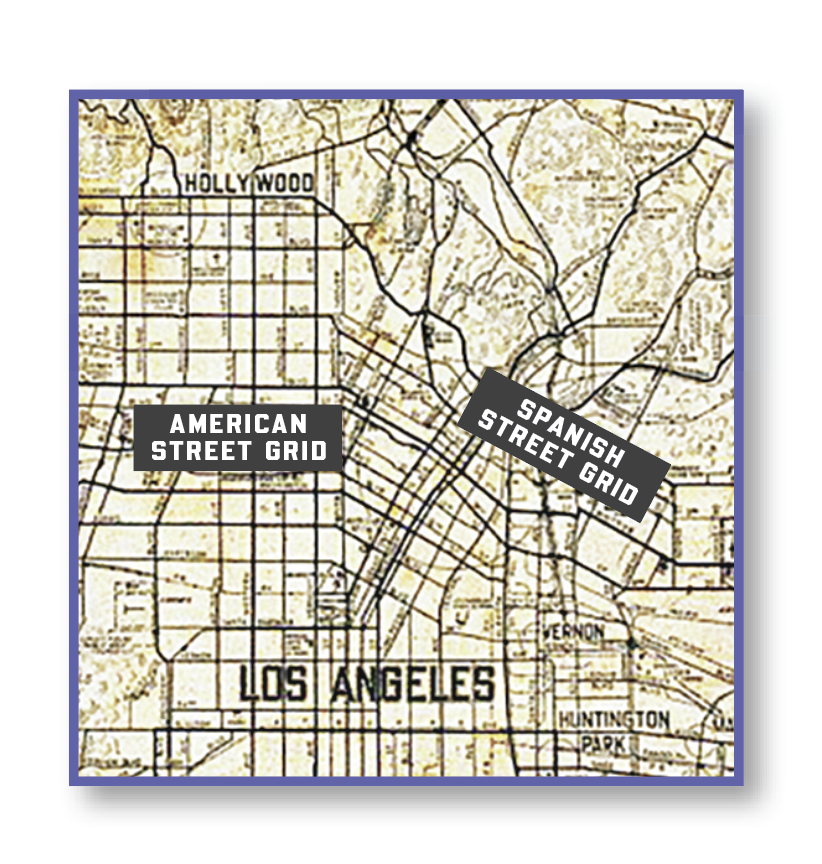
Look closely at a map of downtown Los Angeles and you may notice something strange: The streets don’t form a familiar north-south and east-west grid. Instead, they run at an angle of about 36 degrees, creating the famously crooked layout of the city’s core. Many have speculated: Was there a Masonic conspiracy hiding in plain sight? Not quite. The unusual street pattern was shaped by Henry Hancock, a surveyor and a member of Los Angeles No. 42. In 1857, Hancock was hired to map the land surrounding the original pueblo. His survey divided the 16 leagues of surrounding unoccupied land—granted by King Charles III in 1781—into simple square tracts. But Hancock only surveyed the adjacent land; he wasn’t responsible for the angled streets downtown. Those had been laid out generations earlier under Spanish colonial planning traditions. Following the 16th-century Law of the Indies, the angle was intended to take advantage of sunlight and prevailing winds.
So while there’s no Masonic conspiracy behind LA’s crooked streets, there is a Masonic connection: When you travel roads like Alvarado Street and Rampart Boulevard, you’re following grid lines drawn by a fellow Mason. —RP