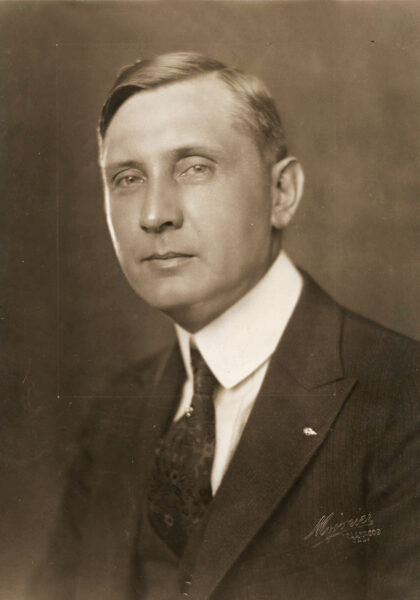
Rolling the credits on the golden age of Hollywood—an era of marquee glitz and pin-up glamour that runs from the late 1920s through 1960—names like Chaplin, Garbo, Bogart, and Bacall get top billing. Charles E. Toberman evoke the same Technicolor trappings or noir nostalgia? Perhaps not, but fame was never part of the Texas native’s ambition.
In 1902, Toberman arrived in Los Angeles, following an uncle who had served multiple terms as mayor. Five years later, he shifted his focus to Hollywood, then a semirural landscape of citrus groves that would eventually yield to his entrepreneurial spirit and knack for city planning, an ethos he later distilled in his 1970 autobiography, Free Enterprise: Foundation of America’s Greatness, “Mankind always has, and I believe always will, find his greatest self-expression in WORK.” (A case-sensitive sentiment.) Maybe Toberman wasn’t a leading man in the silver-screen sense, but he’s still remembered as the Father of Hollywood.
The Placemaker
Over the course of an 80-year career in real estate development and banking, Toberman joined developers, studio executives, financiers, and fellow Masons at Hollywood № 355—where he served as master in 1914—to transform the agricultural community into the epicenter of the entertainment industry.
 When filmmakers including Cecil B. DeMille and his business manager, future studio mogul Samuel Goldwyn (né Goldfish), began migrating from New York to California in the 1910s in search of sunshine, open space, and freedom from the patent restrictions on cameras and projectors that controlled much of the East Coast film industry, Toberman recognized an opportunity. He championed Hollywood Boulevard—then a dusty, unpaved road known as Prospect Avenue, where he opened his first real estate office, a one-room lean-to at Hollywood and Highland, in 1907—as the civic and commercial spine for, as a C. E. Toberman Co. advertisement proclaimed, “Hollywood’s new era of development.” Historian Gregory Paul Williams, author of 2005’s The Story of Hollywood, notes that Toberman had “a bigger vision than just sticking a building on a parcel.”
He envisioned something more akin to a humming ecosystem that encompassed nearly every facet of civic life— “place-making” before that word entered the lexicon of 1970s urban planners. Toberman pushed for movie studios to locate south of Santa Monica Boulevard in the late 1910s, part of an early land-use effort that kept the industry’s daily mechanics off the Boulevard while encouraging workers to gravitate there for everything from banking to food. Toberman and his frequent real estate partner, Edwin Palmer, both opened banks on the Boulevard, while Café Montmartre on the second floor of the aptly named Toberman Building served borscht alongside enchiladas. Celebrities, including a table-dancing Joan Crawford and the silent-film stallion Rudolph Valentino, were known to grace its doors. Toberman may have kept the grind of moviemaking off the Boulevard, but by developing its landmark picture palaces, he set the stage for the opening-night pageantry that still fuels Hollywood mythmaking.
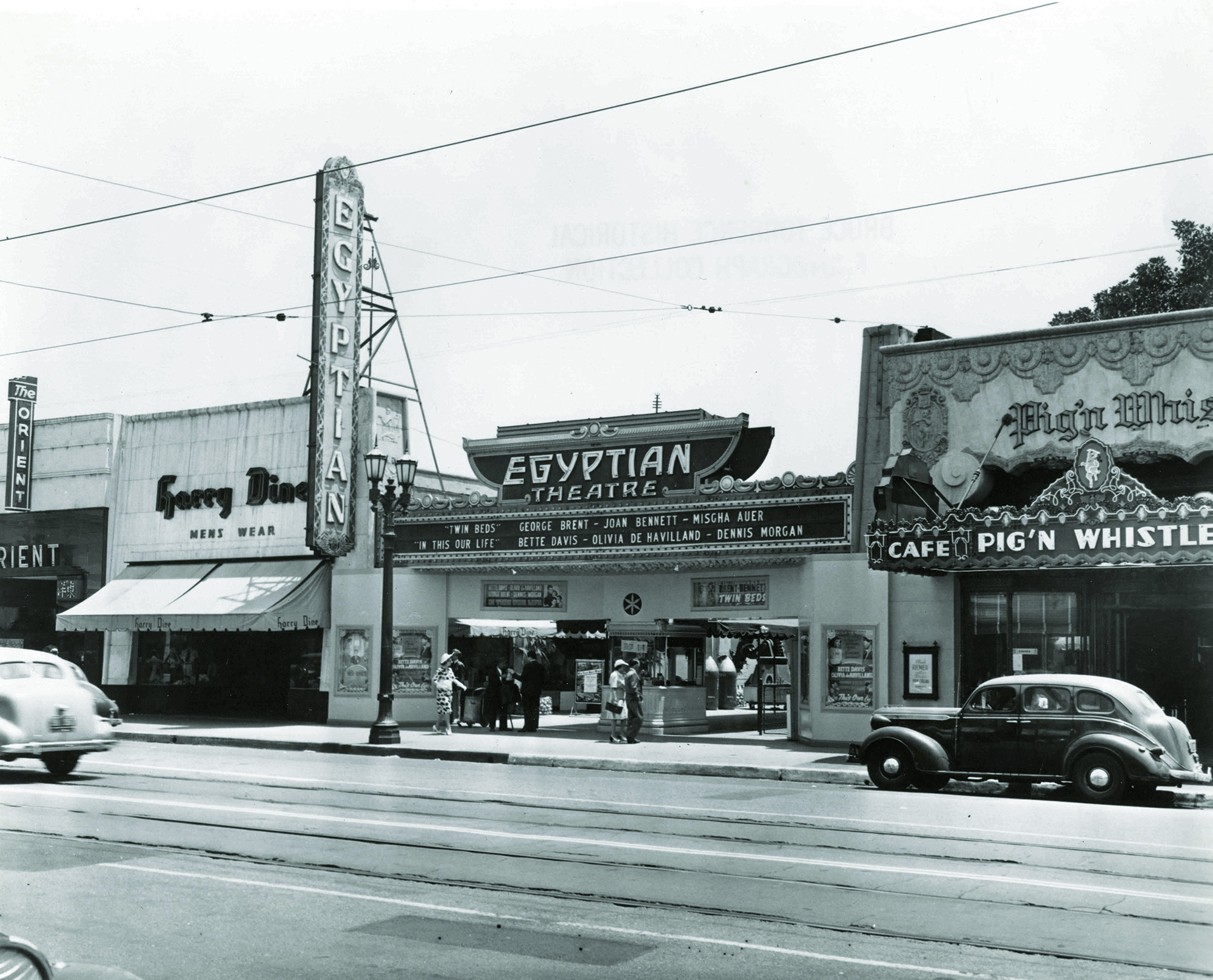
The Egyptian and Chinese Theatres were co-developed by Toberman and San Francisco impresario Sid Grauman, whose vaudeville roots fed his propensity for pomp. Bedecked with hieroglyphic murals, plaster pharaohs and sphinxes, and a gilded sunburst that doubled as an organ grille, the Egyptian debuted on October 18, 1922, with the premiere of Robin Hood. The spectacle featured searchlights, a red-carpet procession led by fellow Mason Douglas Fairbanks, who played the film’s hero, and an elaborate “prologue” with a live orchestra, dancers, and medieval-themed stage sets—showmanship at full throttle before the projector was even switched on.
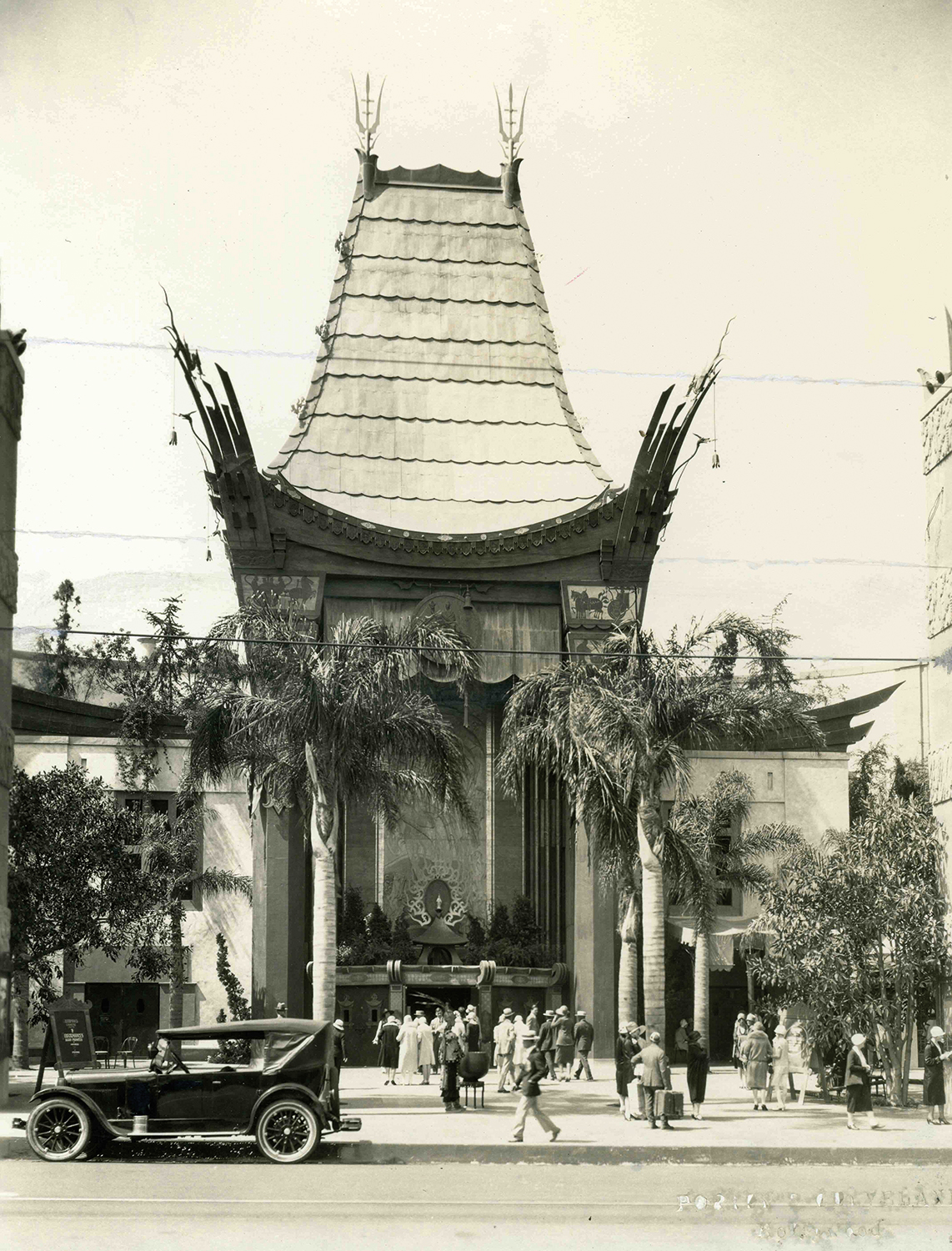
The Chinese Theatre, adorned with authentic Ming dynasty relics and a pagoda-style copper roof 90 feet above the entrance, followed on May 18, 1927, with DeMille’s biblical saga The King of Kings, drawing an estimated 50,000 enthusiasts to the Boulevard. Three days later, Toberman opened the Roosevelt Hotel across the street; two years later, on May 16, 1929, amid its arcaded loggias and Moorish tilework, the first Academy Awards were handed out during a 15-minute ceremony. Another Toberman theater, El Capitan, with its Spanish Baroque facade of carved sea creatures and drama masks, originally opened in 1926 as a venue for stage productions; it hosted its first movie premiere, Orson Welles’s Citizen Kane, in 1941. Through it all, the land baron remained the éminence grise behind the scenes. As Marc Wanamaker, founder of the LA-based entertainment-research company Bison Archives, puts it: “Toberman just wasn’t a publicity nut.”
Join the Club
For a man who believed that institutions outlasted individuals, Freemasonry was a natural fit. Despite remaining active in the fraternity for more than seven decades alongside numerous Hollywood notables—including John Wayne, a Master Mason and later member of Al Malaikah Shrine (which calls the Shrine Auditorium in LA home); Gene Autry, a Master Mason raised in Catoosa № 185 in Oklahoma; and fellow Hollywood № 355 members DeMille and Roy Rogers—Toberman rarely spoke about Freemasonry at home. “I’m sure it had a very positive effect on his life,” says his grandson Bruce Torrence. “It also brought him together with other business leaders, entertainers, and civic figures in Hollywood, and I think he enjoyed that.” Masonic historian Adam Kendall of Phoenix № 144 and Benicia № 877 isn’t surprised about Toberman’s discretion. “For many Masons of that era, the fraternity was deeply personal—a community where you looked after your brothers, not something for ego. Flaunting it was considered unbecoming of a gentleman.”
That same restraint did not extend, architecturally speaking, to the Hollywood Masonic Temple, which opened in 1922. Toberman spearheaded financing for the roughly $177,000 project by selling $100 lifetime memberships in the Hollywood Masonic Club, a workaround that allowed the lodge to raise construction funds without tapping fraternity dues and gave secular film executives and other local elites access to a first-floor social hub complete with billiard room, ladies’ parlor, and grand ballroom anchored by a pipe organ. (The Masons met upstairs on the second floor.) Architect Ignacio Villarin, master of Hollywood № 355, rhapsodizes over the neoclassical building, designed by John C. Austin, citing its six Ionic columns, “signifying prominence, grandeur, and stability,” and its “purposeful symmetry” that “exemplifies balance.”
If that symbolism seems too subtle for a fraternity that counts some of America’s founding fathers among its members, Kendall puts it this way: “If a Mason wanted you to know that this was a Masonic building, you would know it was a Masonic building.” The parapet leaves little room for doubt about whose house this is, bearing the inscription, “Freemasonry builds its temples among nations and in the hearts of men.” For more than a century, the temple has remained the Boulevard’s center of gravity, surviving the lodge’s 1980 move to Van Nuys and Disney’s late-1990s restoration before becoming the studio for ABC’s Jimmy Kimmel Live! in 2003.
Beyond the Marquee
Yet, despite the inclusion of the Hollywood Boulevard Commercial and Entertainment District on the National Register of Historic Places in 1985, Bruce Torrence insists his grandfather was proudest of two projects beyond the main artery, specifically in the Hollywood Hills—the Hollywood Bowl, an “incredible community event,” says Torrence, where Toberman was “able to develop something truly special”; and Outpost Estates, where “you couldn’t just build whatever you wanted.”
The latter was one of more than 30 residential subdivisions Toberman developed, with construction ranging from modest bungalows to large custom homes. Toberman also lived in Outpost Estates, where he required structures to have fire-resistant roofs and undergo architectural review, creating what amounts to a prescient response to present-day wildfire danger and a prototype of the now-ubiquitous homeowners’ association. Interestingly, the late-1920s development occupied land associated with the apocryphal 1847 signing of the Treaty of Cahuenga, which ended hostilities in California during the Mexican–American War. As with Freemasonry, Tober-man’s version of order involved architecture rather than armies, but was just as concerned with keeping the peace.
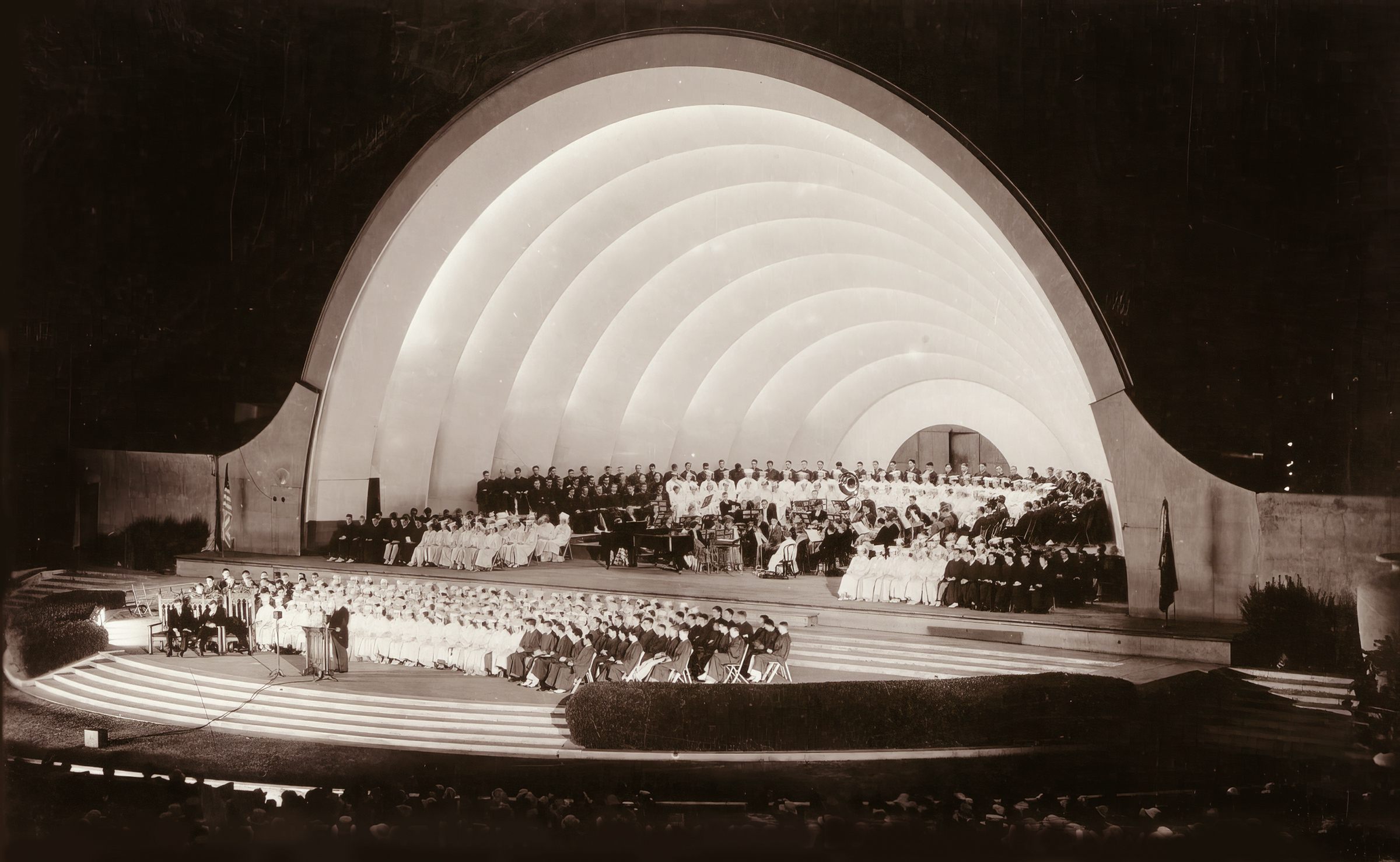
The Hollywood Bowl remains one of Los Angeles’s most beloved civic spaces, its iconic shell—rooted in early designs by architect Lloyd Wright, son of Frank Lloyd Wright—framing performances that have drawn more than 100 million visitors since the venue opened in 1922. Toberman, a founding figure who kept developers away from the site—a natural, hillside amphitheater then known as Daisy Dell—by donating surrounding land to the project, served as vice president and president of the Hollywood Bowl Association in the 1920s and ’30s, respectively. The Hollywood Bowl Museum’s 2024–25 exhibition Building the Bowl: From Dream to Destination describes Toberman as “a music lover with a pragmatic streak,” a sensibility reflected in programming that spans everything from the Los Angeles Philharmonic to Sound of Music sing-alongs.
Map of the Century
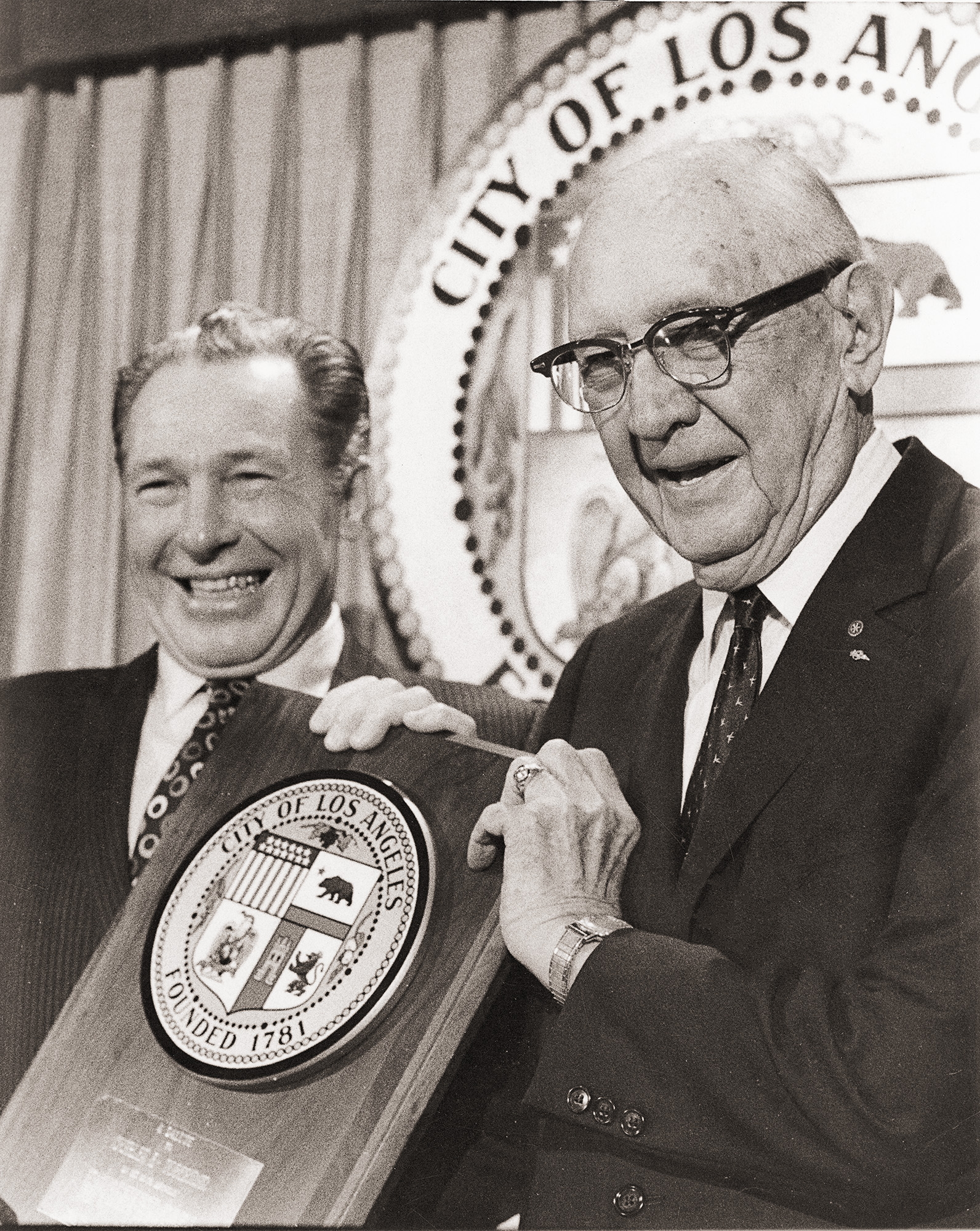
For someone who believed that work represented humanity’s highest form of self-expression, retirement was never much of an option. The stock market crash of October 1929 left Toberman $3 million in the red (the equivalent of $59 million today), with the mortgages he held rendered nearly worthless and other income sources vaporizing almost overnight. True to the habits of a self-made entrepreneur, he spent the following decades rebuilding his fortune while remaining active in business. Torrence recalls that his grandfather, who died in 1981 at age 101, still reported to his Boulevard office in a suit and tie until he was 100. Though he avoided the limelight, Toberman left behind an extraordinary portfolio of globally recognized cultural institutions. “Hollywood was really lucky to get Toberman,” says Bison Archives’ Wana-maker. “He could have landed in Glendale instead.”
Photograph courtesy:
Herald Examiner Collection/Los Angeles Public Library
Bruce Torrence