

For many California students, math remains one of the biggest barriers to academic success. State assessment data shows that only about one-third of students meet grade-level standards in math, with even larger gaps among students in underserved communities.
With the help of the California Masonic Foundation, a new initiative in Los Angeles is taking a new approach: bringing math home and helping families see that learning continues after the school day ends.
Meet Family Math
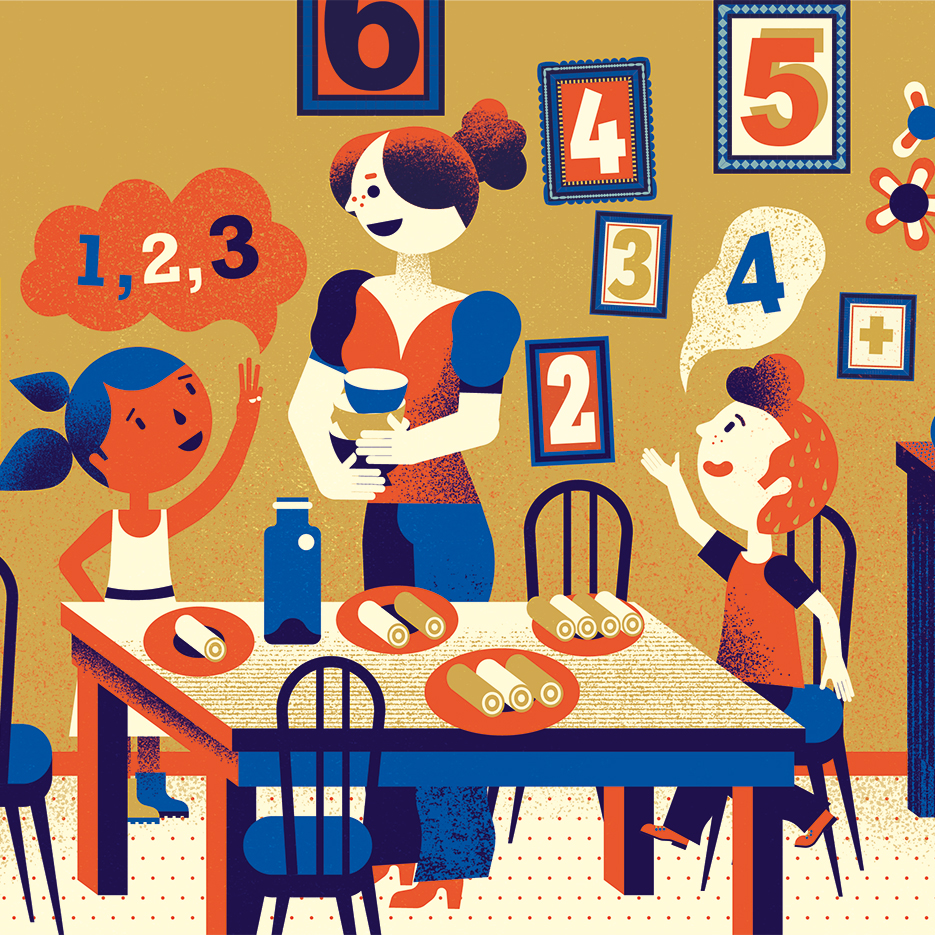
The idea behind Family Math is simple: Kids build confidence when they see math as part of everyday life. Measuring ingredients while cooking. Spotting patterns on a walk. Comparing prices at the grocery store. Estimating how many blocks it takes to reach the park. These ordinary moments become opportunities to explore numbers, problem-solving, and critical thinking. Math is everywhere.
Research shows that when par-ents and caregivers feel anxious about math, children can develop similar feelings. By helping the whole family see that math is something they already use every day, Family Math is designed to break that cycle, replacing uncertainty with curiosity.
Currently serving 1,000 students in transitional kindergarten through second grade in LA, the California Family Math Initiative brings together educators and fami-lies through hands-on activities, games, storybooks, and multilingual family guides designed to make math engaging and accessible.
The program launched in the 2025–26 school year at the Ritter and Sunrise elementary schools in Los Angeles, with additional schools joining the effort this fall.
Early results show students embracing the opportunity to share how they find math in their own lives, including more than 200 student videos created through a partnership with PowerMyLearning’s MathVoice platform. After completing a short math activity at home, students record TikTok-style audio or video reflections explaining what they discovered—giving teachers a window into how each student applies math at home.
Why It Matters
Early math skills are among the strongest predictors of future academic success. Building confidence and curiosity during the elementary school years gives students a strong foundation as concepts become more complex. But the goal is more than improving test scores. It’s about helping children see themselves as capable thinkers and problem-solvers, and helping families discover that learning opportunities are all around them—in bedtime stories, in the kitchen, and on the walk to school.
For California Masons, supporting initiatives like Family Math reflects a long-standing commitment to strengthening communities and helping the next generation succeed. “Masons have always believed in engaging parents in a child’s academic success,” says Doug Ismail, president of the California Masonic Foundation. “We’ve invested millions promoting that with early literacy—and now see a tremendous opportunity with Family Math. Our initial investment of nearly $1 million helps our partners develop an evidence-based approach to family engage-ment that we hope will create a new standard for supporting early math education.”
Holly Kreider, director of the Center for Family Math, shares this sentiment. “We envision a world where Family Math advances educational equity for each and every child. Our job is to bring together all the innovative learning resources our partners offer into an interactive, actionable home-learning program that is adopted by families.”
The most important lessons are often found during moments families share every day. When children discover that math is something they can understand, explore, and enjoy, confidence grows—and success really does start adding up.
These simple questions encourage children to compare, estimate, reason, and solve problems—the same foundational math skills they use in the classroom. Everyday conversations can become oppor-tunities for discovery.
Sometimes the best math lessons are right in front of us.
Michelle Booth is director of strategic communications at the National Association for Family, School, and Community Education.
Illustration by:
Gwen Keraval