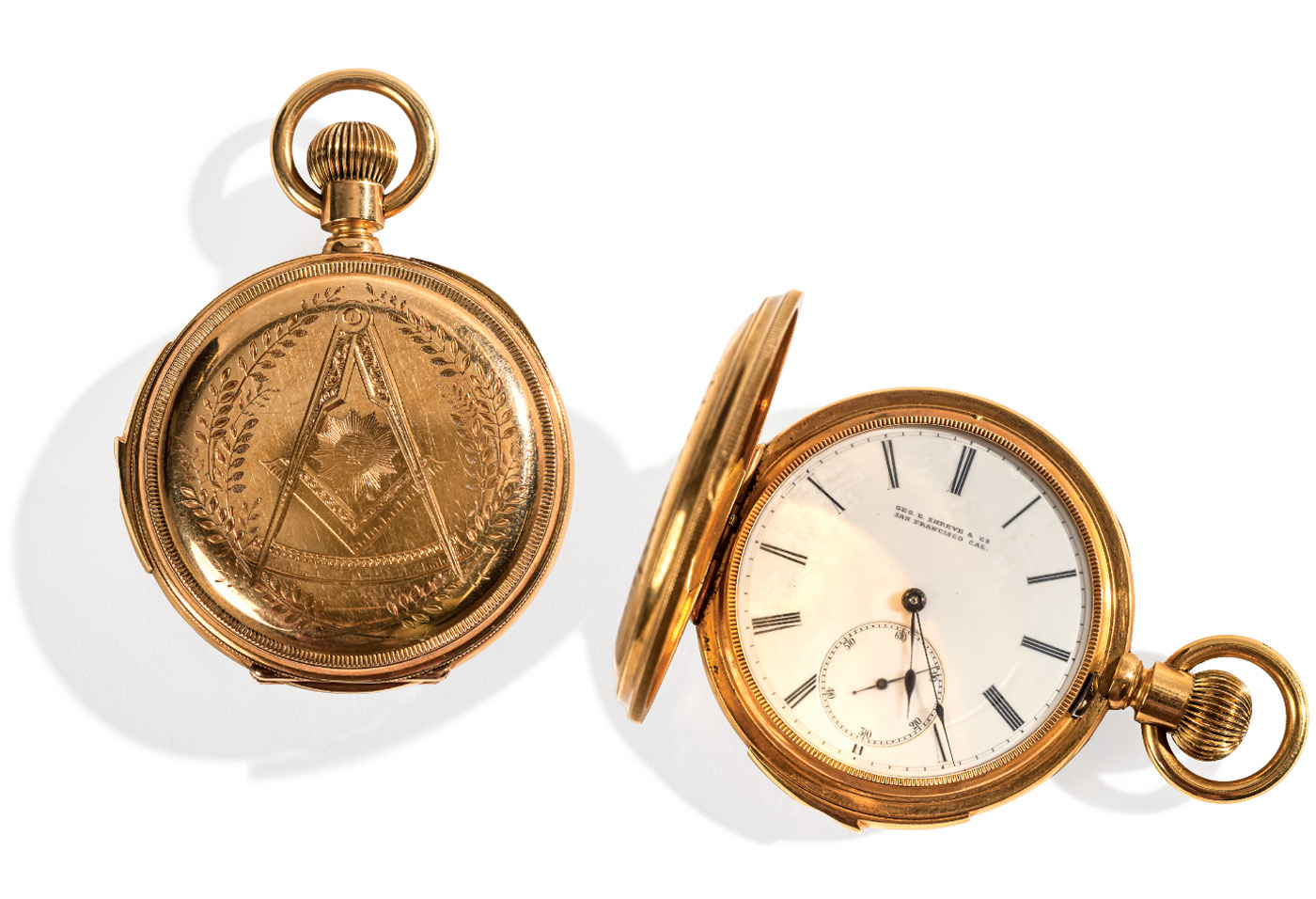
The story of Walter Wilcox, known as “The Masons’ Boy,” turns on an 1874 James Perret pocket watch. In 1878, at age four, he was orphaned and left with his mother Hattie’s gold timepiece, a gift from Garden City Lodge № 141 in Chicago after she cared for a dying brother and arranged his return home. The watch became more than an inheritance: its engravings—Hattie’s name on the front, her fraternal affiliations on the back—served as Wilcox’s credentials, setting the cogs of Masonic aid in motion. From the Grand Lodge of Louisiana to the Grand Lodge of California, brotherly connections carried Wilcox to his grandmother in Oakland and, after her death, to a Mason who would adopt him.
Pocket watches, the wearable tech of the Gilded Age, have long marked status, service, and success beyond the lodge, says Joseph Evans, archivist at the Henry W. Coil Library and Museum of Freemasonry. They made punctuality “a morally elevated thing,” according to Robert Levine, author of A Geography of Time, and “stemwinder”—someone constantly winding his watch—became shorthand for an industrious worker.
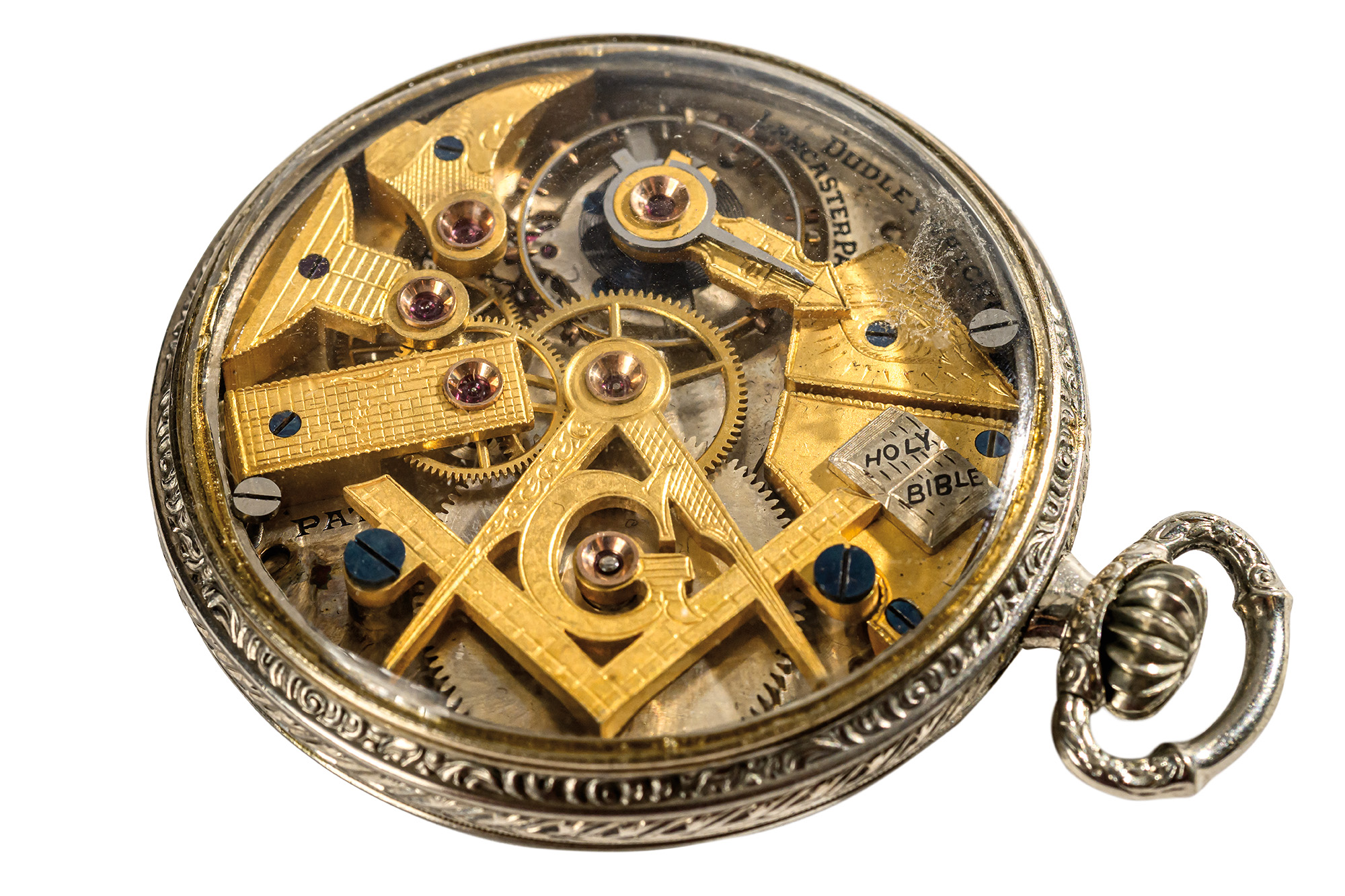
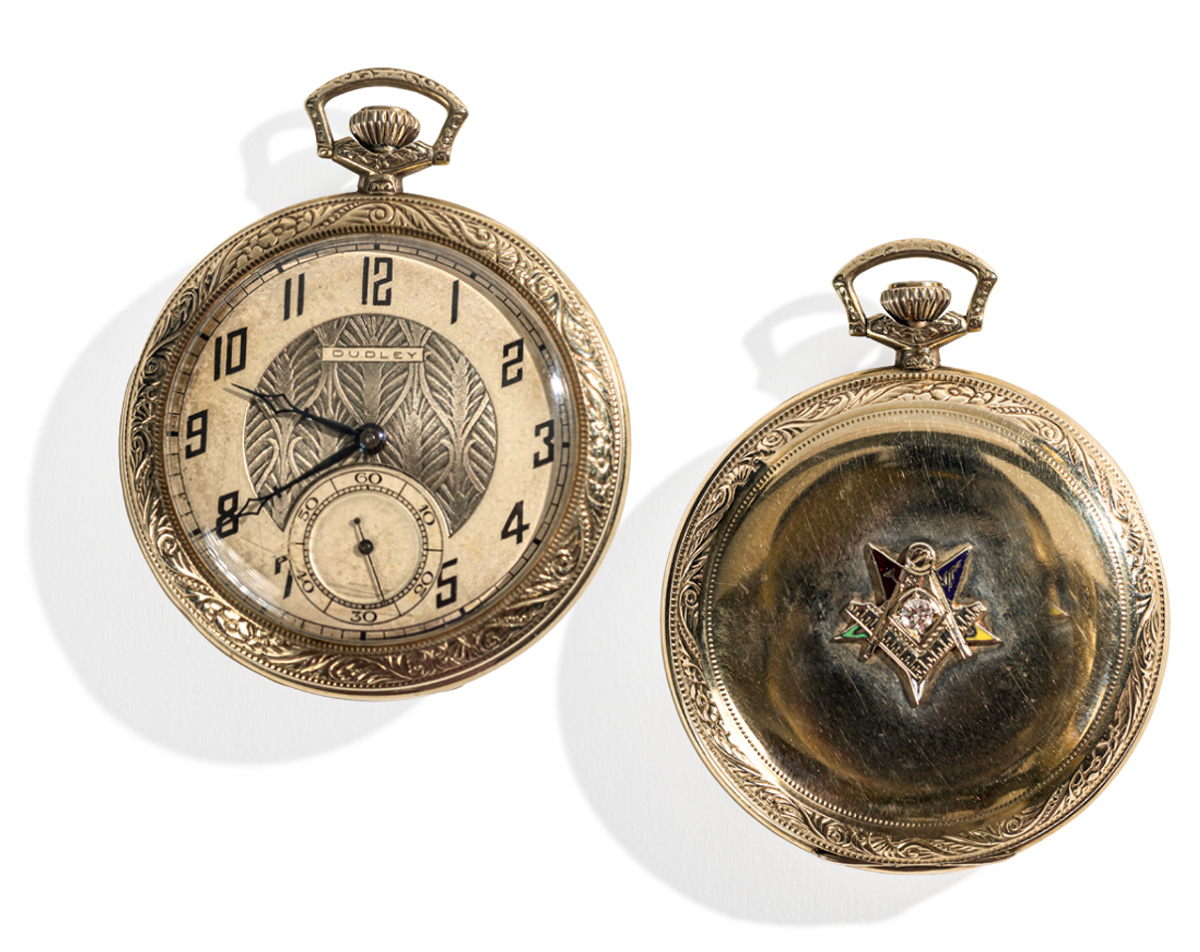
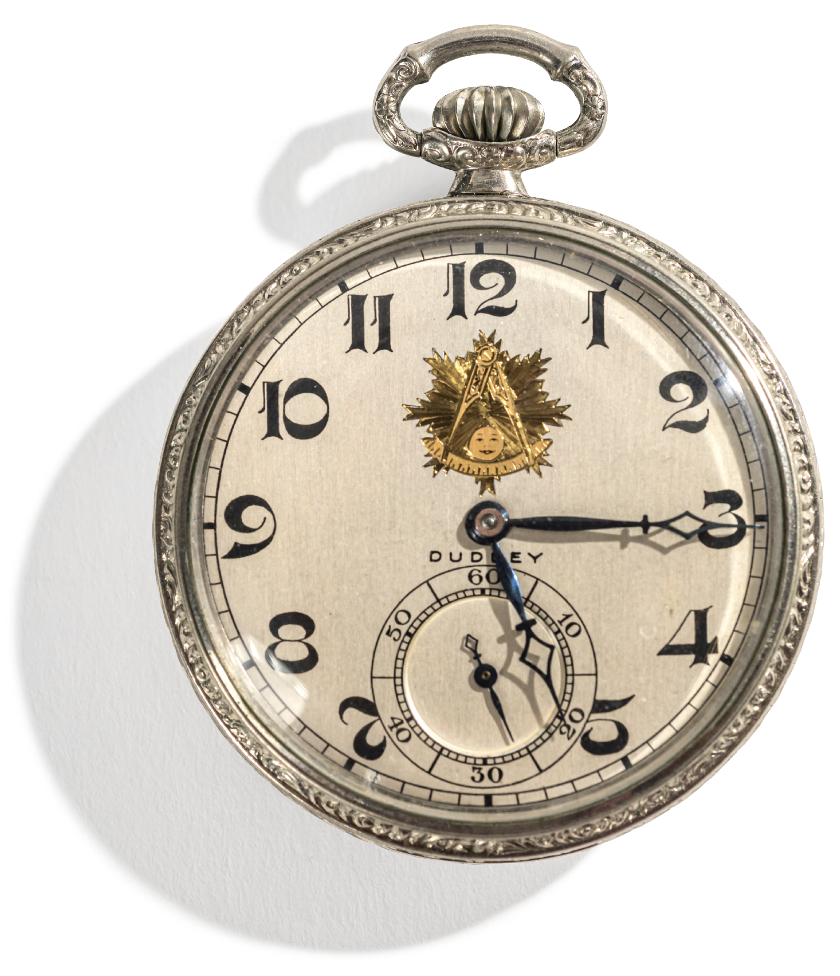
The museum collection includes about a dozen pocket watches, among them Wilcox’s fabled timepiece and an 18K gold hunting-case watch from the Swiss luxury maker Patek Philippe, presented to Past Grand Master Clay Webster Taylor by the Grand Lodge of California in 1884, commemorating his two terms as Grand Master. Several watches by William W. Dudley, a Mason and horologist who founded a watch company in Lancaster, Pennsylvania, are also represented, their movements built from bridge plates shaped like Masonic working tools—square and compasses, level, plumb, and trowel. “Masons wear watches with symbols and inscriptions to signal their membership without saying a word,” says Evans. Clockwise, in more ways than one.