

The first Masonic apron Narbeh Bagdasarian ever saw wasn’t inside a lodge. It was hidden beneath a box of records in the Tehran home of his violin teacher. As the musician lifted one vinyl album after another, Bagdasarian noticed an unfamiliar bundle at the bottom. “What’s this?” he asked. “It’s a Masonic apron,” his teacher replied.
The answer surprised him. What came next stayed with him. His teacher explained that he was a Freemason—and that one of the craft’s defining principles was religious tolerance: “We don’t discriminate against people because of the way they worship God,” he told his young student.
There was a reason the apron had been tucked away. For more than a century, Freemasonry flourished in Iran—even influencing the country’s first constitution—before the 1979 revolution drove the fraternity underground, into closets, attics, and forgotten boxes in private homes. Years later, after moving first to Germany and then to California, Bagdasarian sought out a lodge for himself. “I just fell in love with it,” he says.
There was another reason those ideas resonated. For many Armenian families, questions of religious freedom and identity were anything but abstract. The genocide of 1915 scattered communities throughout the Middle East, Europe, and even California. Many rebuilt their lives more than once. Against that history, Freemasonry’s commitment to tolerance carried unusual weight. Bagdasarian’s journey to Freemasonry began in Tehran. For Ara Maloyan, it was amid the upheaval of the Iranian Revolution.
For Sebouh Badoyan, it began after escaping civil war in Lebanon.
Their paths to California could hardly have been more different. Maloyan’s family left Iran before the revolution reached its peak. His father, who had sent him to London and then California, watched from abroad as the family’s manufacturing businesses were seized and destroyed. Not long after, Maloyan lost his mother to cancer. “Everything was taken over, burned,” he says. “I knew that I would never go back to do anything with that. I grew quickly with a lot of turmoil.”
For Badoyan, the defining moment came in Beirut. As Lebanon descended into civil war, his father made a decision that would shape the rest of his life. At 16, Badoyan was sent to California to avoid mandatory conscription. “My dad, God bless his soul, said, ‘I did not raise you for 16 years for them to kill you in 16 days,’” he recalls.
Common Ground
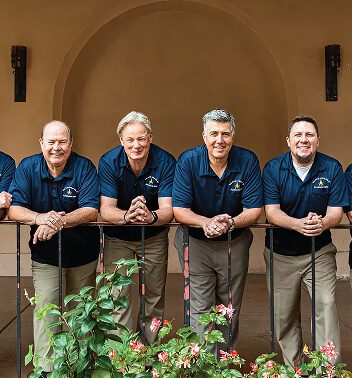
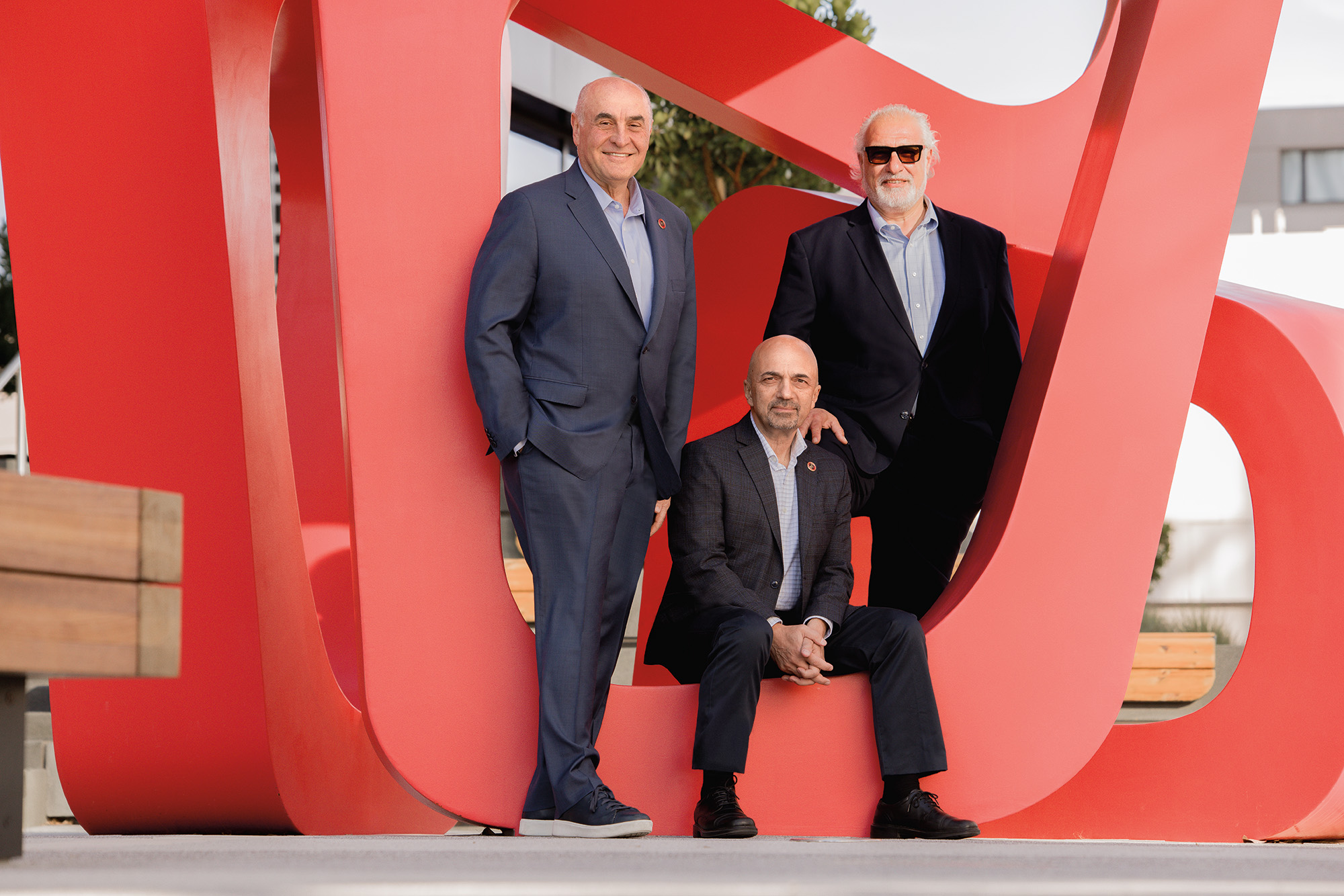
The three men arrived by different roads— Bagdasarian’s journey began in Tehran. Maloyan’s amid the Iranian Revolution, Badoyan’s during the Lebanese Civil War. Years later, those roads led to the same place.
They would at last converge in two Southern California lodges—Glendale № 368 and Ararat № 848.
Badoyan encountered the craft through his wife’s grandfather. Invited to dinner at Ararat before becoming a member, he looked around and immediately recognized half the room.
“They were asking me, ‘What are you doing here?’” he recalls with a laugh. “And I was asking them, ‘What are you doing here?’ They had all been Masons for years.”
Maloyan’s introduction also came through family. In 1999, he overheard relatives discussing his then wife’s cousin—a Mason who would later become grand master of the Grand Lodge of Armenia. Long drawn to philosophy and esoteric traditions, Maloyan soon petitioned a lodge in Washington, D.C., the first there to receive permission to conduct the ritual in Armenian. Today, he serves as deputy grand master of the Grand Lodge of California and is a member of Ararat № 848.
Founded in 1905, Glendale № 368 wasn’t created with a particular ethnic community in mind. Over the next century, however, the city changed—and the lodge changed with it, as Glendale, one of Los Angeles County’s largest cities, became home to one of the world’s largest Armenian communities outside Armenia. Glendale Masons have been deeply involved in the greater LA community ever since. Each April in Montebello, members join residents and Masons from across the country to remember the Armenian genocide. Their community work extends across LA County, including sponsoring the city’s police foundation, partnering with the Glendale Unified School District to honor educators, and taking part in local Memorial Day services.
Ararat № 848, chartered a century later in 2005 in the San Gabriel Valley, was born of a different need. Created to make the Masonic ritual accessible in Armenian, it remains the only California lodge authorized to confer degrees in the language. Yet members are quick to point out that language is a vehicle for access—not a boundary.
“I really don’t want to call them Armenian lodges,” Badoyan says. “There’s no such thing as an Armenian lodge. It doesn’t matter what religion you practice, what color you are, what language you speak—you are welcome in our lodges.”
Bagdasarian has experienced that idea in five languages. He conducts the ritual in German, English, Farsi, French, and Armenian, discovering that familiar words can deepen familiar lessons.
“It’s the same ritual. The same concepts. The same words,” he says. “But every language gives them a different flavor, a different color, a different tone. In Armenian, it feels closer to the heart.”
That distinction—between honoring heritage and defining oneself by it—runs through both lodges.
Members trace their roots to Iran, Lebanon, Armenia, Syria, and elsewhere across the Armenian diaspora. Some arrived in California as children fleeing political upheaval. Others came decades later through work or family. Few followed the same path.
Maloyan believes that’s exactly the point.
“If you focus on the soul,” he says, “you will love somebody for their soul and not for the shape of their body or the color of their eyes, or where they were born, or what religion they were brought up in. We grew up with Armenian heritage and that identity. But Freemasonry transcends all of that.”
Decades after discovering a hidden Masonic apron beneath a stack of records in Tehran, Bagdasarian now helps place those same aprons on new California Masons. An object that once had to be hidden now rests in plain sight—not because its meaning has changed, but because new hands are free to carry it forward.
Photograph courtesy:
Martin Klimek