
Father Knew Best
Newly installed Grand Master of California John E. Trauner opens up about leadership lessons, learning from history, and heeding the advice of his greatest herou2014his dad.
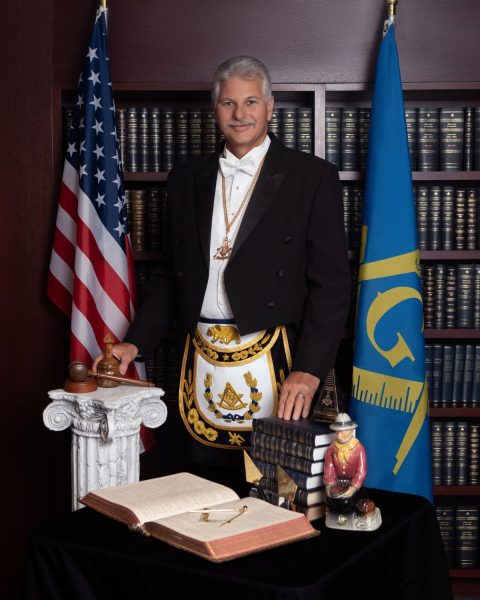
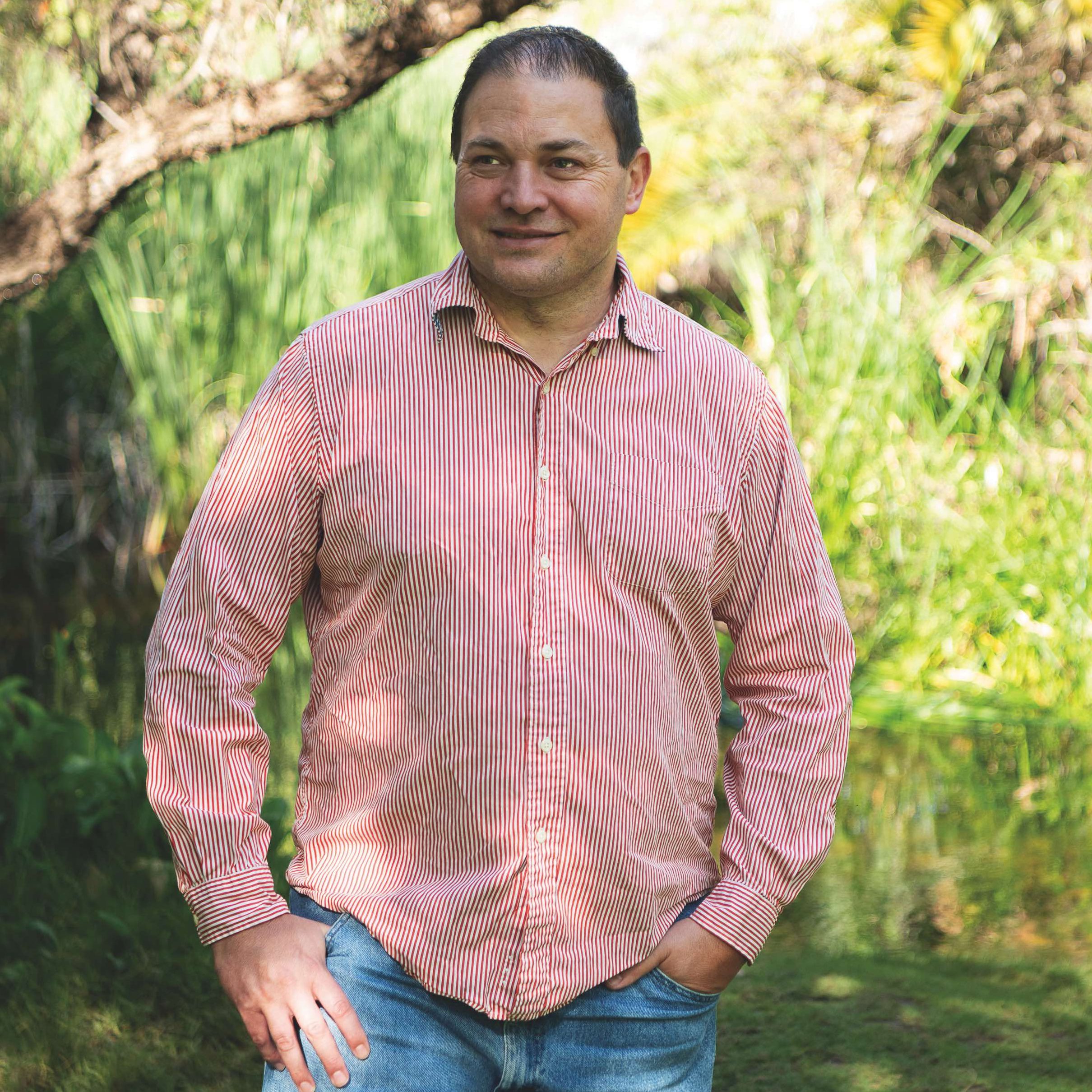
Speak with John E. Trauner for very long, and itu2019s clear that the memory of his father, Tommy Trauner, looms large. u201cHe was, and will always be, my greatest hero,u201d Trauner says of his father, a well-known and longtime public servant in Nevada County. It was into Tommyu2019s lodge, Madison No. 23, in Grass Valley, that the younger Trauner was initiated more than 20 years ago, and where he followed in his footsteps to become lodge master. On the eve of his installation to the highest Masonic office in the state, Trauner reflected on the leadership lessons his father imparted on him, how they shaped him, and his vision for the future of the fraternity.
California Freemason: For members who might not know you, can you explain how you got involved in Freemasonry?
John E. Trauner: Growing up, my dad was a Mason, and Iu2019d been to lodge with him as a kid. But as life went on, he never asked me to join. I figured he didnu2019t want me to be a Mason, or that I wasnu2019t worthy of it. I didnu2019t realize that they couldnu2019t proselytize about it. Finally, when I was 42 years old, my dad and I were working on the ranch together and I asked him if itu2019d be possible for me to be a Mason. And the old man got quiet and started crying. And he said, u201cSon, I waited 21 years for you to ask that question.u201d
CFM: What about the fraternity spoke to you?
J.T.: I didnu2019t know much about it at first. But once I got in the organization, I realized that itu2019s something thatu2019s much larger than myself. I enjoy the memory work and the ritual, and I enjoy the esoteric symbolism. I was an officeru2019s coach for many years, and to this day, I love to teach ritual.
CFM: Getting into lodge leadership and later Grand Lodge leadership is a big commitment. What made you want to take that responsibility on?
J.T.: Thatu2019s not difficult. The way I was raised, my dad said if you ever belong to an organization, you should want to take charge of it. So if you belong to a nonprofit, become the president of it. The Masons need leadership. He even said to me, u201cYou could become the grand master someday.u201d And, of course at the time, you laugh at that. But in every organization that Iu2019ve belonged to, Iu2019ve become the head of it. Thatu2019s just my makeup. I find it easier to get involved and make an organization better, than complaining about it.
CFM: What would you like the fraternity to look like in one year?
J.T.: One of my great priorities is the obligation renewal ceremony. I want brothers to remember why theyu2019re Masons, to remember their obligation. Beyond that, Iu2019m looking forward to making strides on our 2050 plan and the announcement of our 2025 operational plan. I really donu2019t foresee a huge change, because frankly weu2019re doing good things. I think itu2019ll be more of a refinement of what weu2019re doing now.
CFM: Youu2019ve also made a priority of recognizing the historic lodges up in your neck of the woods, in Gold Country. Why is that important to you?
J.T.: This whole thing came up because many years ago, I was in a lodge and a discussion came up about where the Masons in California came from. So I started doing research, and I realized that many of our pioneering forefathers of California Masonryu2014the people like Jonathan Stevenson, John Swett, Edward Myers Prestonu2014were miners who came here to find their fortune. And when they couldnu2019t find gold, they evolved into pillars of their community. So, literally, our roots came from miner immigrants. And I want to be clear, every lodge with a number under 100 is a significant part of the history of California Masons. But I happen to live in the middle of gold country, so I saw this as a chance to educate Masons about our roots and the history of California.
CFM: Another theme for your administration is seizing opportunity. What do you mean by that?
J.T.: Opportunity is all around us. I want Masons to look at their lodges, their youth orders, their concordant bodies, and be an agent of change in them. For instance, if youu2019re in an area that has no youth orders, be the spark to create a chapter in your area. Or if you belong to a York Rite body thatu2019s failing, become an officer and bring your leadership abilities to it. Or even something small in your own lodgeu2014replacing the regalia thatu2019s been neglected for yearsu2014be the person that makes that change so that brothers have pride in the lodge. There are as many opportunities as ideas in oneu2019s head.
CFM: Finally, do you have a favorite memory associated with your lodge?
J.T.: In 2002, two years before he died, I was able to stand up in my lodge as a past master and present my father with his 50-year pin. In that moment, it was just a father and a son. It brought a tear to both of our eyes. And it was something thatu2019ll live with me for the rest of my life.